
guides · 14 nov 2026
Bass Swap: How to Mix Two Tracks Without Muddy Low End
You’ve matched the tempo and the kicks land together, but the blend is thick and muddy and the whole mix has gone quieter. Two basslines are fighting for the same space. A bass swap fixes it in one move. More how-to guides on Trip.
By Trip · 3 min read
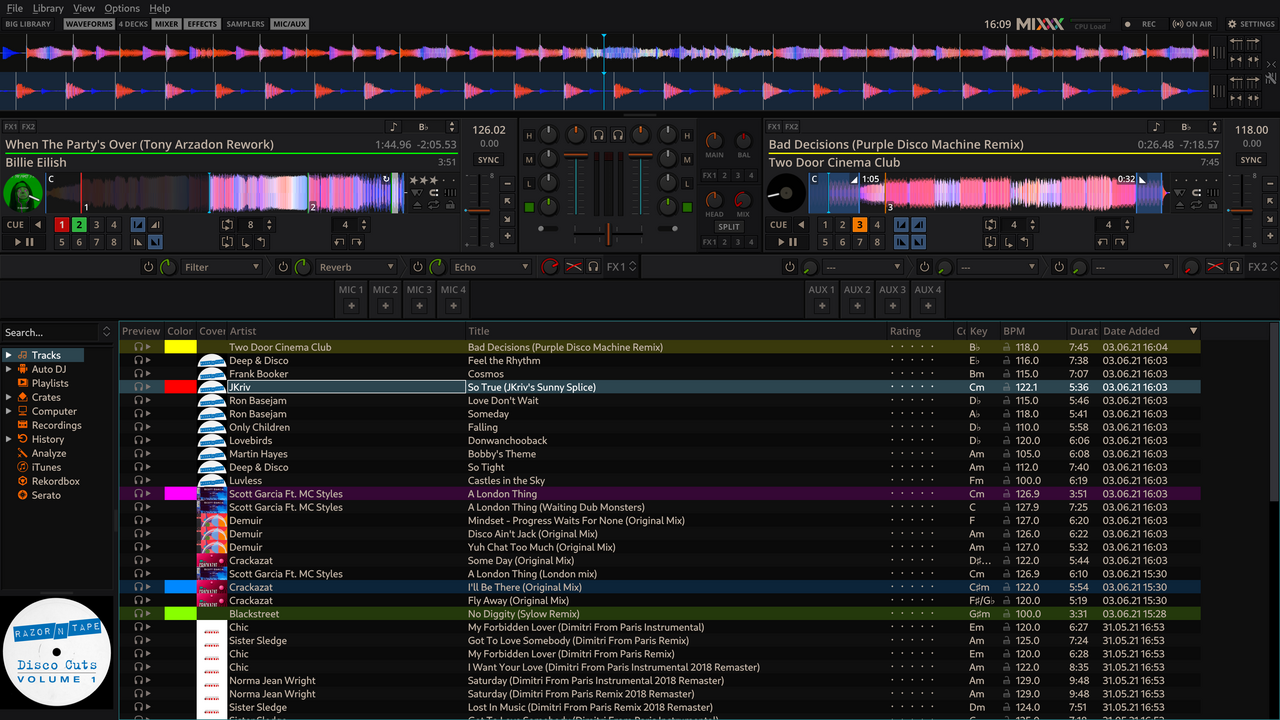
Screenshot: Mixxx contributors, GPL, via Wikimedia Commons
What is a bass swap?
A bass swap hands the low end from one track to the other, so only one bassline is ever playing. Two at once rarely agree, which is why a blend that’s fine on the drums turns muddy. On the Allen & Heath Xone:43 the bass knob is centred at 310 Hz and cuts dramatically when it’s fully down, so it’s built for this job.

How do you do a bass swap in five steps?
Each step comes with its reason.
- Match the levels first. Set each channel’s level so the meter averages around 0, with the loudest peaks no higher than +6. That’s the target in the Xone:43 guide, and your own mixer’s manual will give its version. Do it while the new track’s EQ is flat, because a channel with its bass cut reads quieter and you’ll end up chasing the knob.
- Cut the incoming bass. Turn the new track’s LOW fully down before you raise its fader. The new track can then join in without adding a second bassline.
- Bring the fader up and check the kicks. With the bass gone you’re listening to the hats and the top end. If they drift against the old track, fix the beatmatch now, because EQ can’t hide a wobble.
- Swap on the first beat of a new phrase. Turn the old LOW down and the new LOW up together, one hand on each knob. A phrase change is where the ear expects something to happen, so the swap feels like part of the music. Not sure where the phrase starts? Try our DJ phrasing guide.
- Fade out the old track and reset its EQ. Put every knob back at 12 o’clock before the next record goes on, or the next blend starts with a channel that’s already cut.
The mistake that leaves a hole in the mix
Moving the knobs one after the other. Cut the old bass first and the low end drops out for a beat, so the mix sounds hollow. Open the new bass first and both play at once, so it goes boomy. Both hands together, and neither happens.
The swap is the hard part. Once it’s done, you’ve got as long as you like to bring the rest of the new track across.
Tonight, pick two tracks with long intros and swap the same blend four times: instantly, over two beats, over four, and once with no EQ at all. Record it, play it back, and you’ll hear which one carries the weight.
Next on Trip: USB export for club decks. The method is also covered in Mixgraph’s bass swap entry. These are Trip’s tips, not official instructions.
share
more from the blog